What is clearance?
The risk of falling is a key concept to master when working at height. In this context, calculating the clearance for each specific work situation is vital to worksite safety. See below for the criteria required to calculate the clearance, and how to optimise it.
Clearance is the minimum amount of clear space below the user that prevents the user from hitting an obstacle in case of a fall.
This minimum amount of clear space takes into account the length of the system, the tearing of the energy absorber, an average distance between the harness attachment point and the worker's feet (1.5 m) and a safety margin required by the standard (1 m).
The clearance value varies depending on the work situation. The operator’s position relative to the anchor, the length of the system and the operator’s weight are the main factors in its determination.

Use This Tool to calculate clearance and get more information

A3 Print Ready Poster
Tower Solutions - Clearances
Check out our posters illustrating the key points of a workstation situation on a pylon, antenna or wind turbine: the clearance value, which must be taken into account by all those who move around at height.
Partner Checks
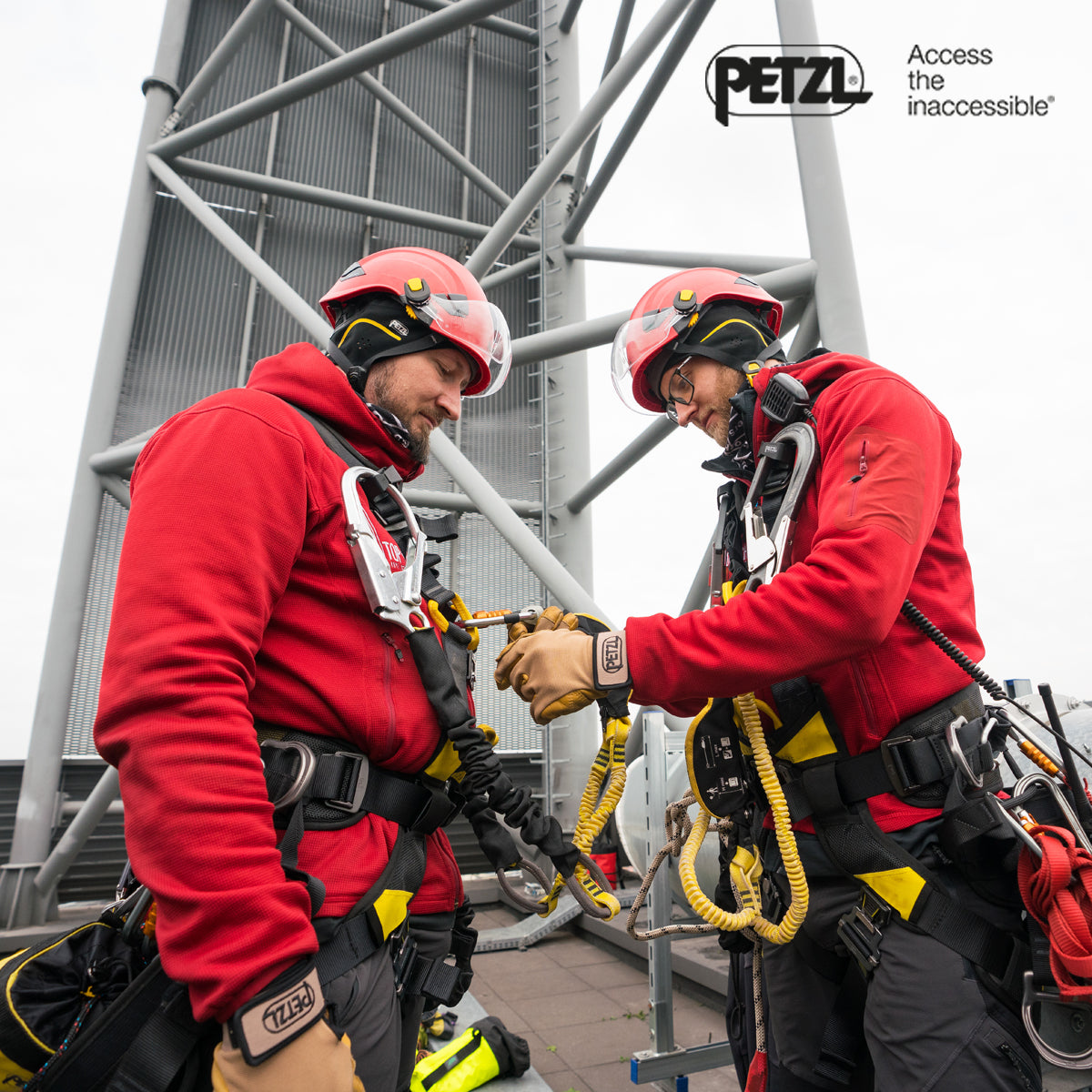
As part of any safe working practices for working at height, working in trees or working on towers, partner checks are imperative. Remind your employees by displaying posters that remind employees which items need to be visually checked and what needs to be manually/physically checked.

A3 Printer Ready Poster
Work At Heights - Partner Check
If your teams work with the NEWTON harness and the ABSORBICA fall-arrest lanyard, here is a PARTNER CHECK poster made just for them!

A3 Print Ready Poster
Tower Solutions - Partner Check
Check out our poster illustrating the key points of a partner check when working on a pylon, antenna or wind turbine