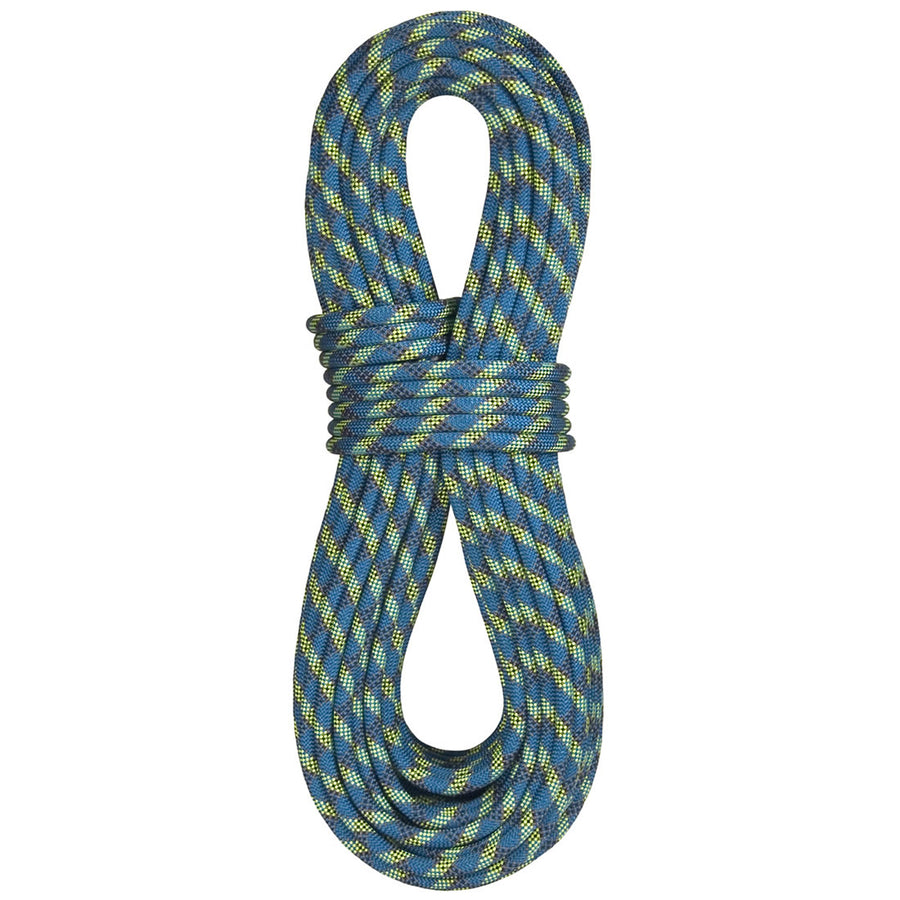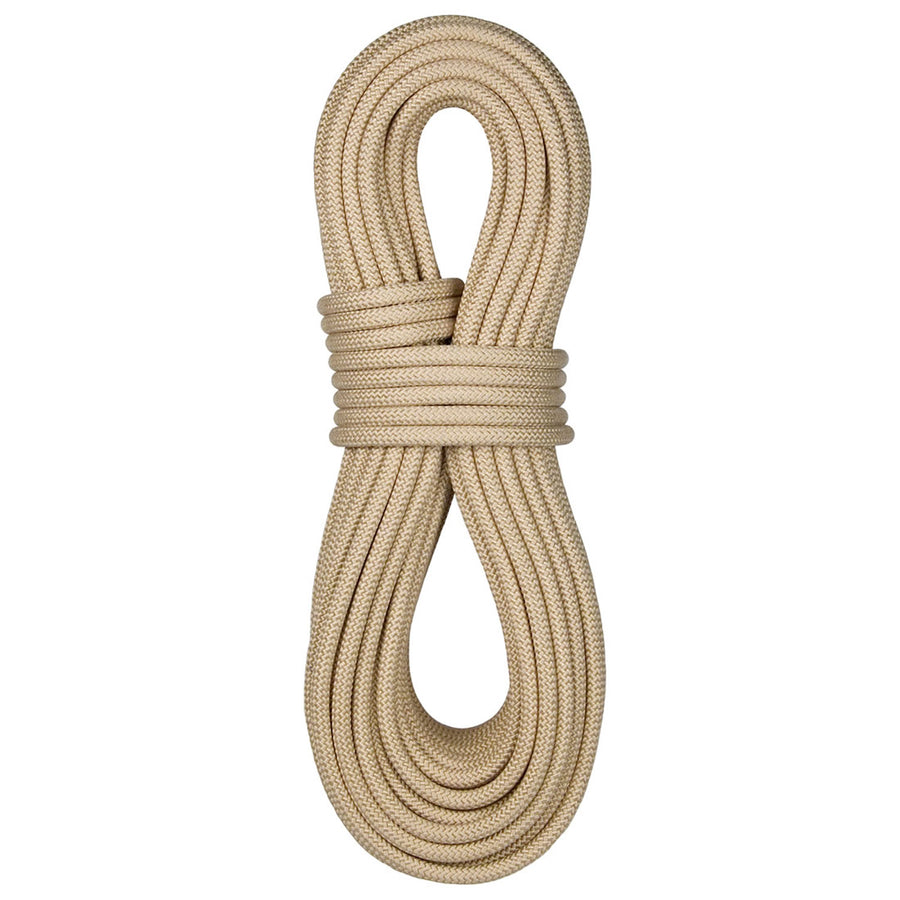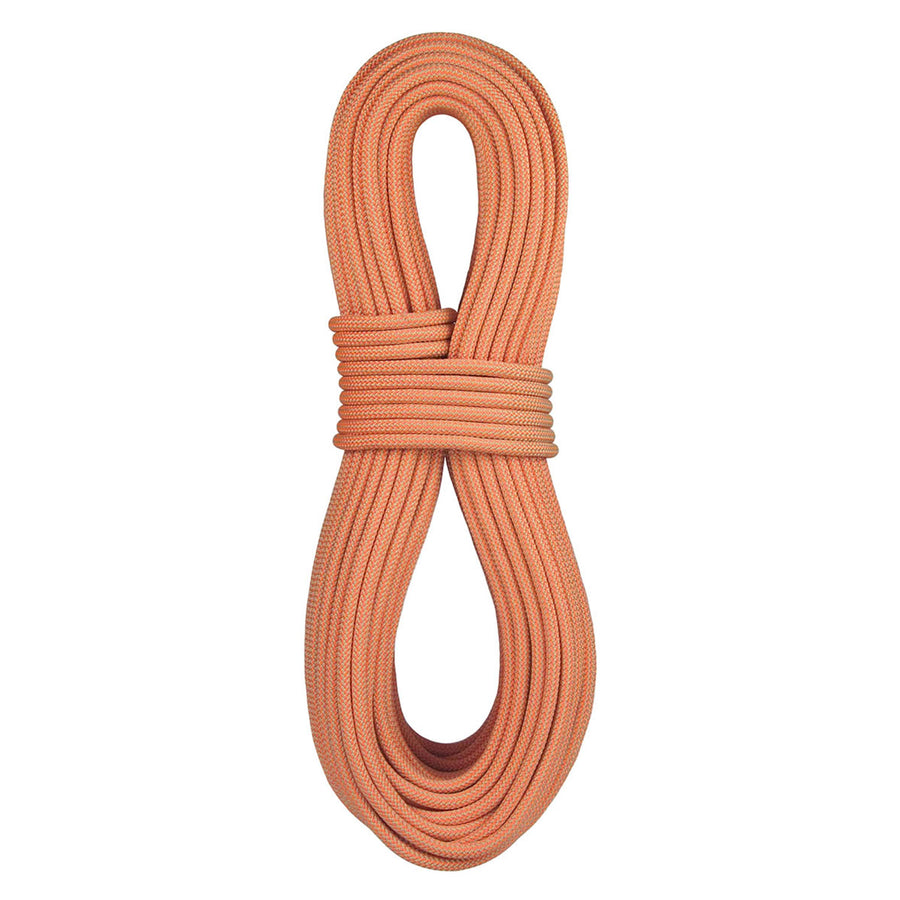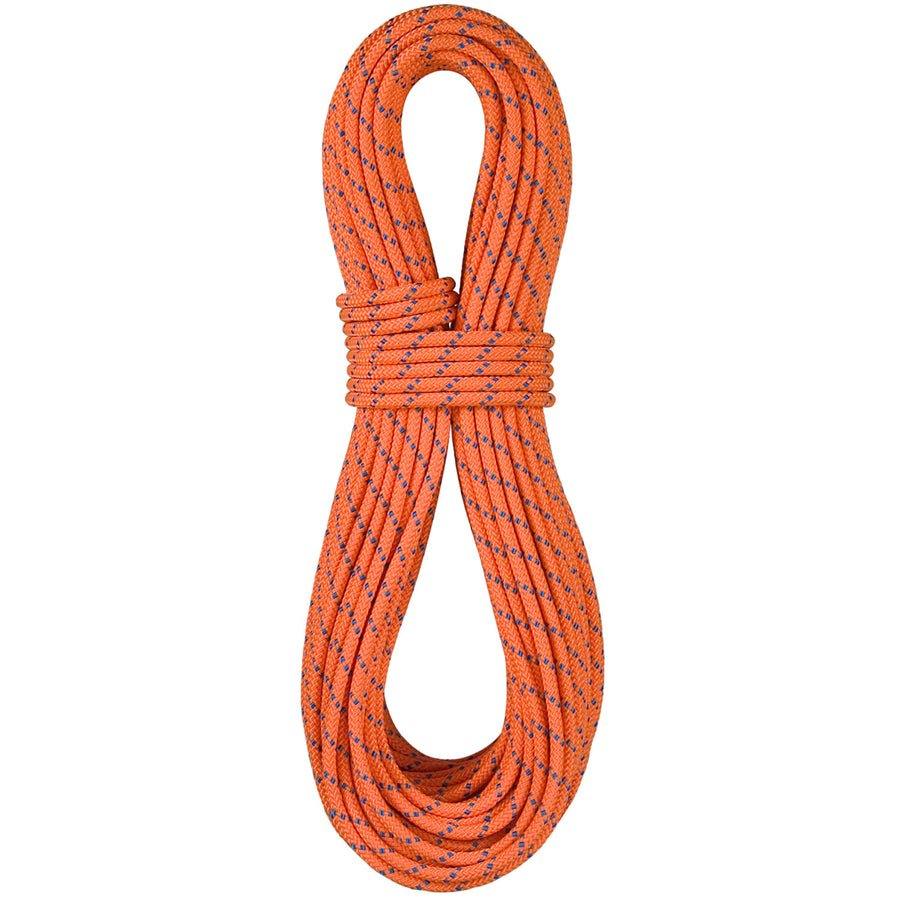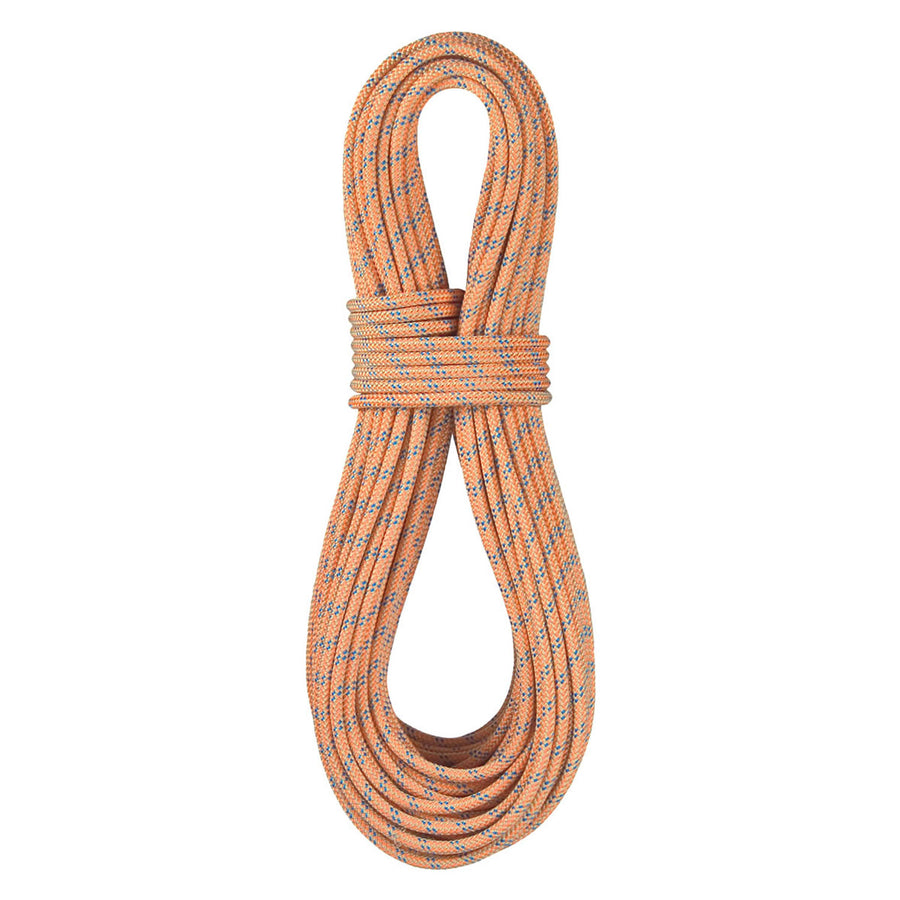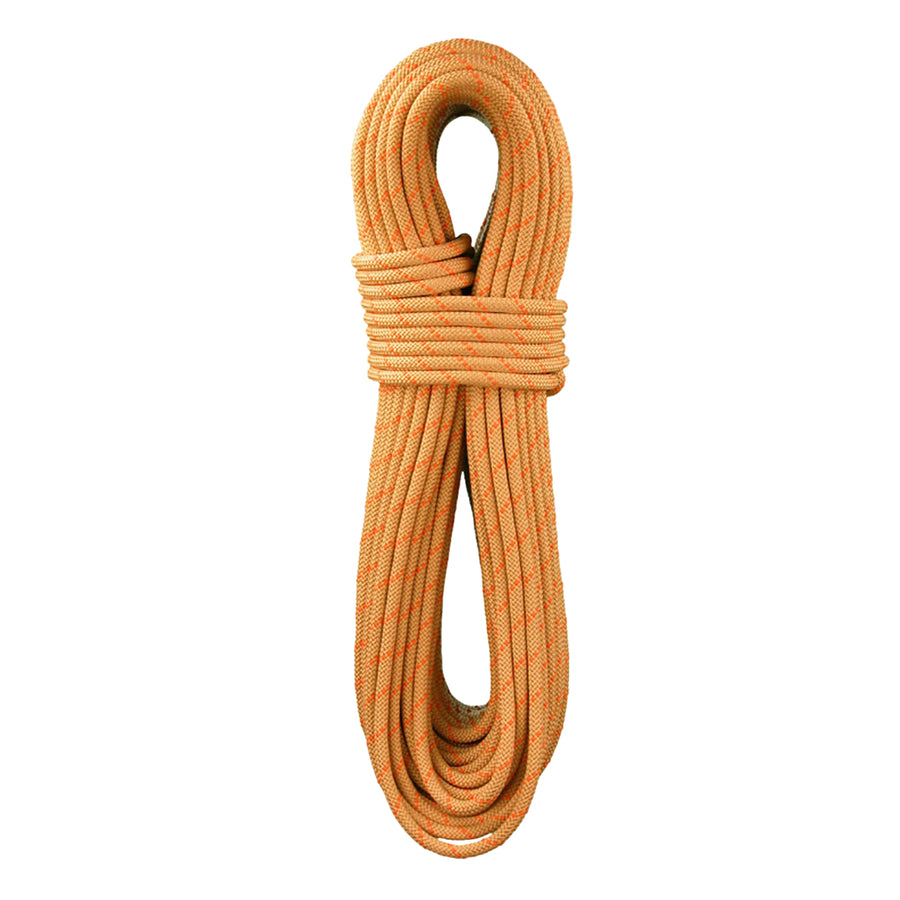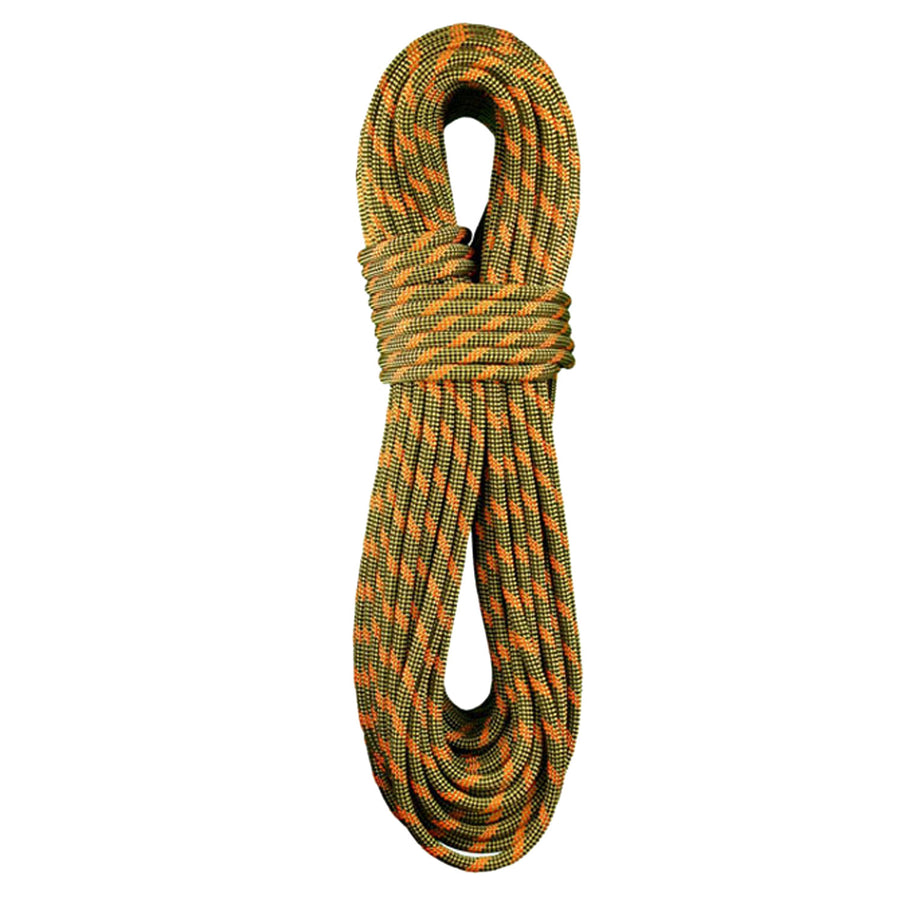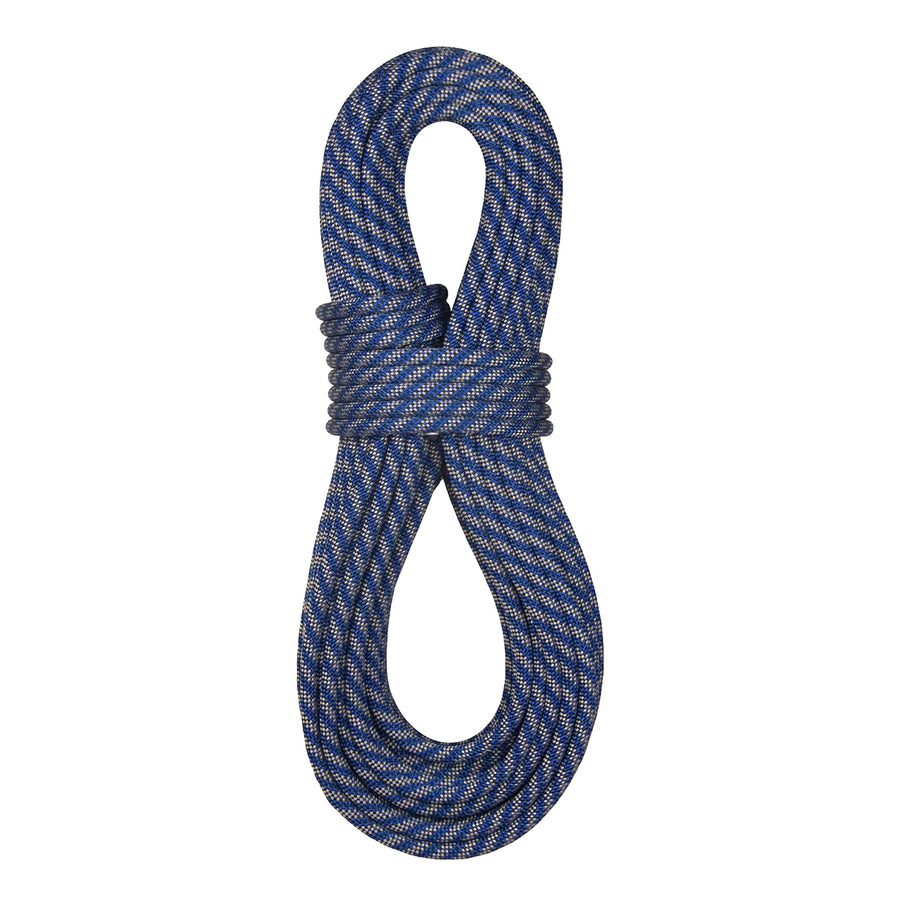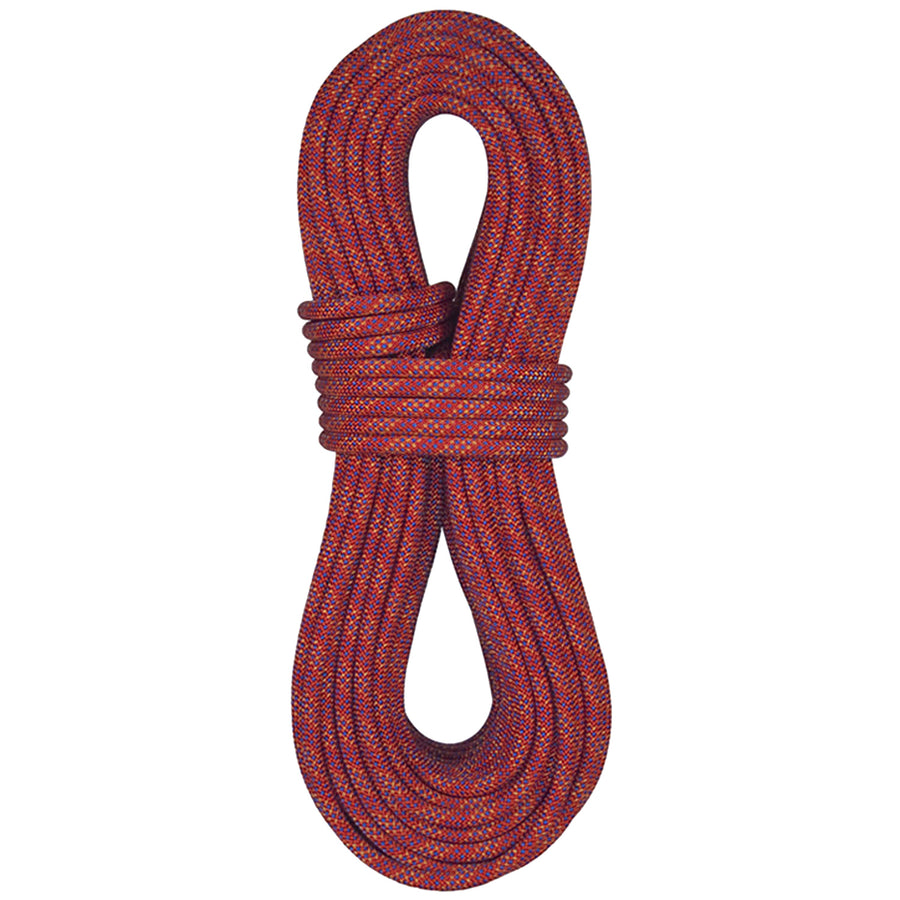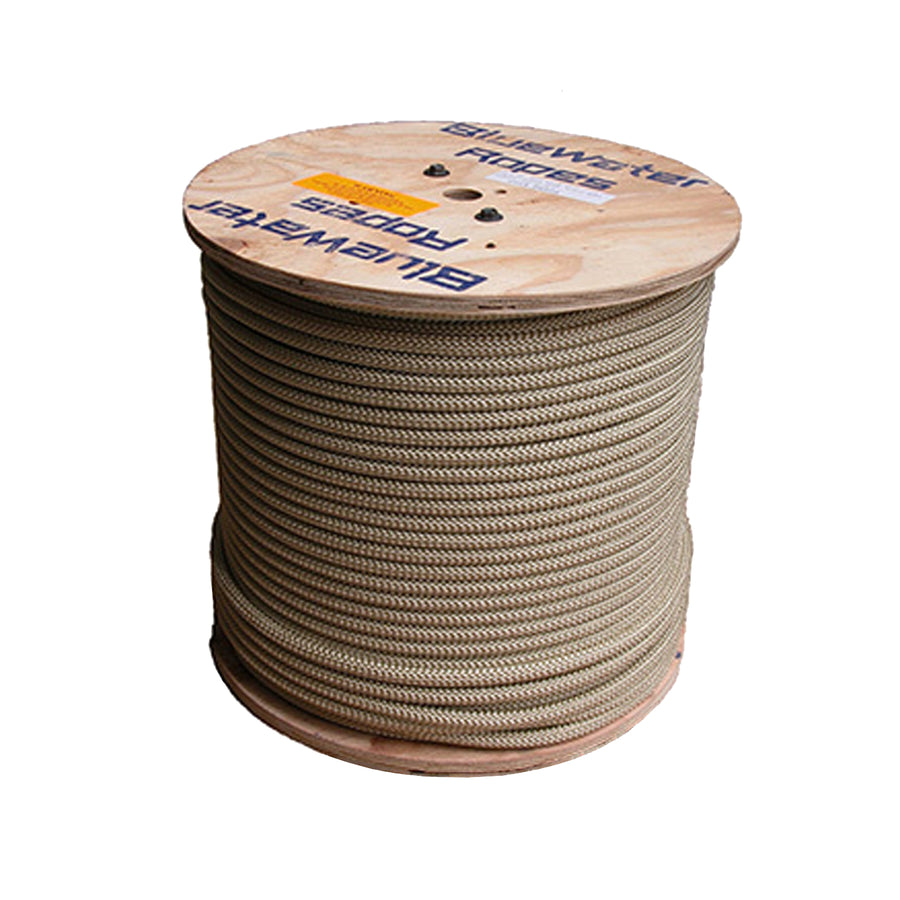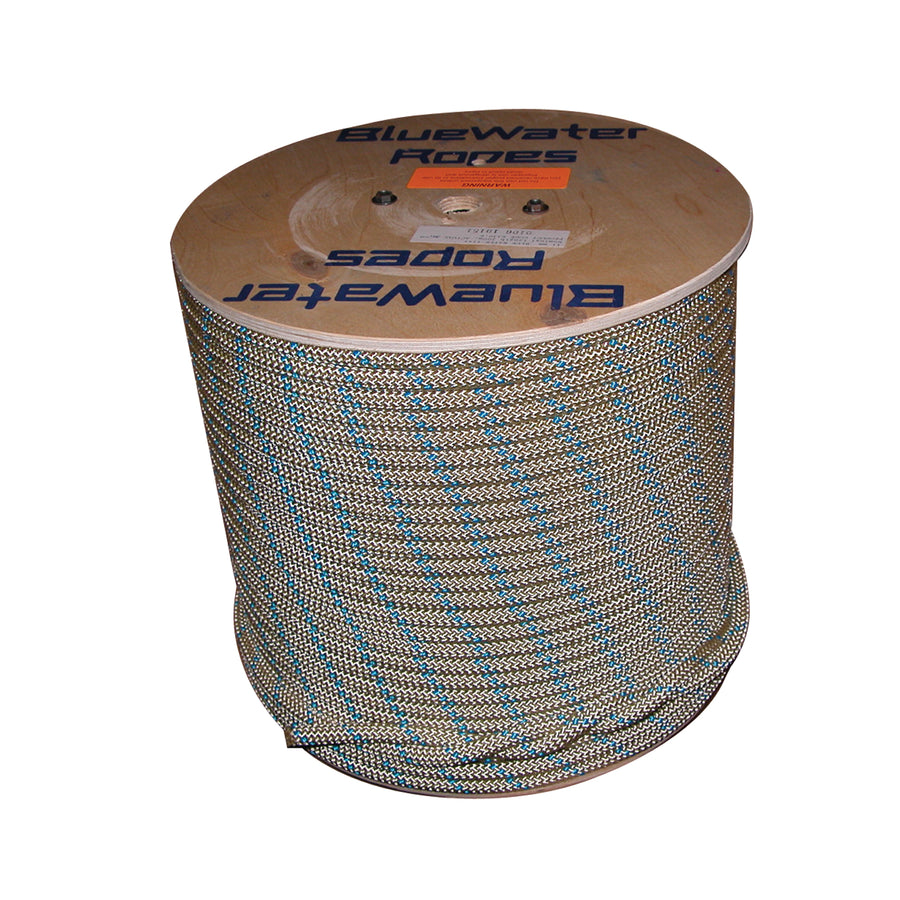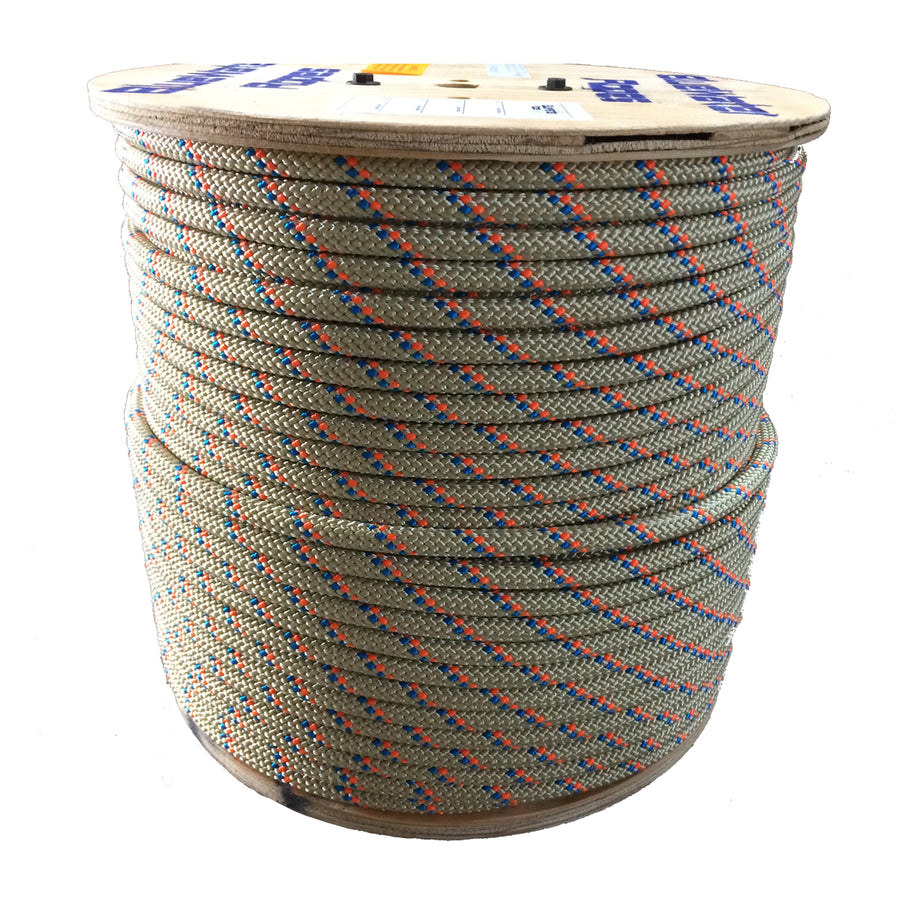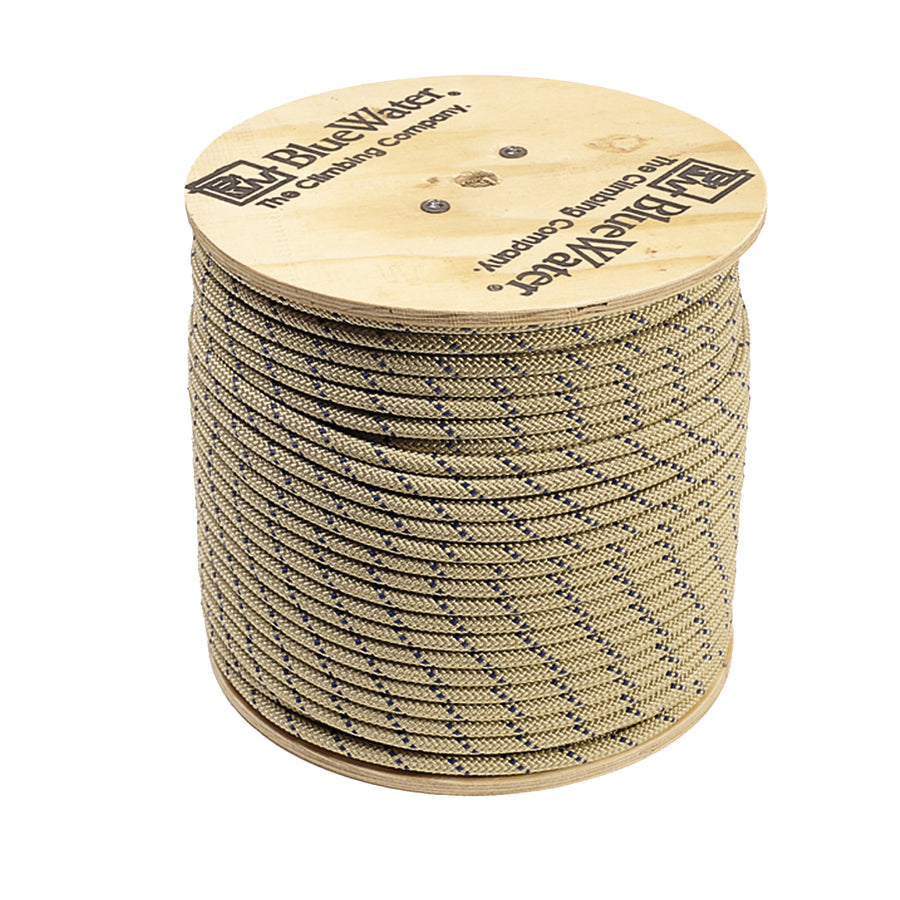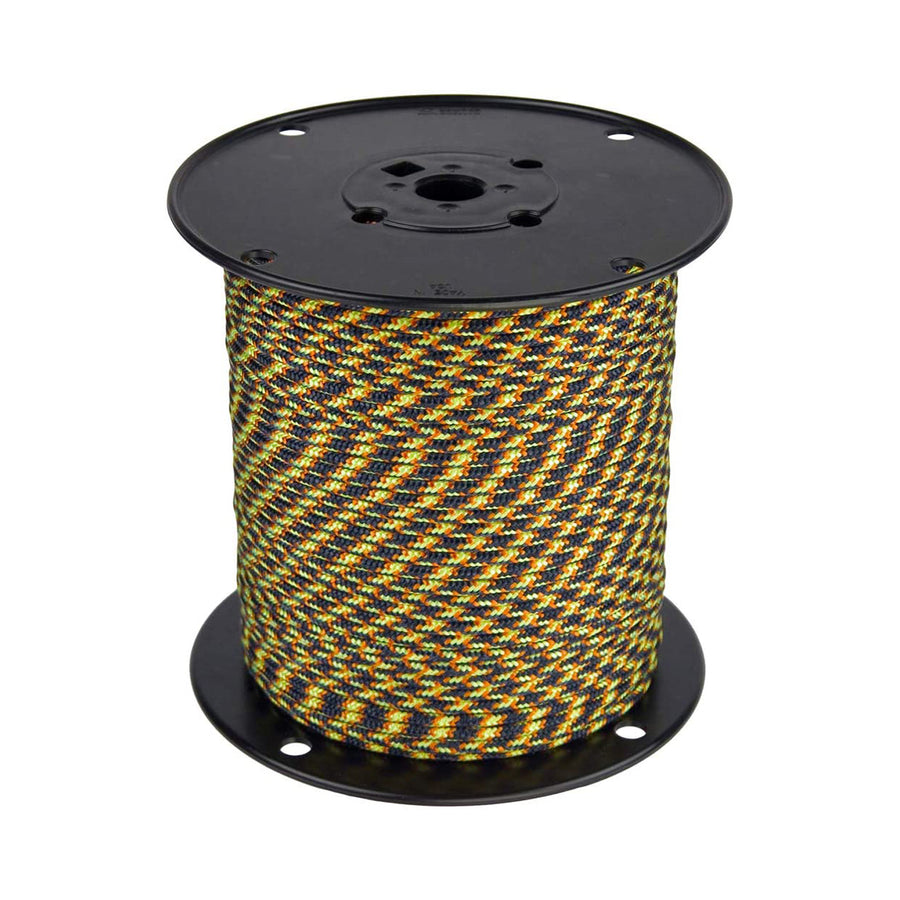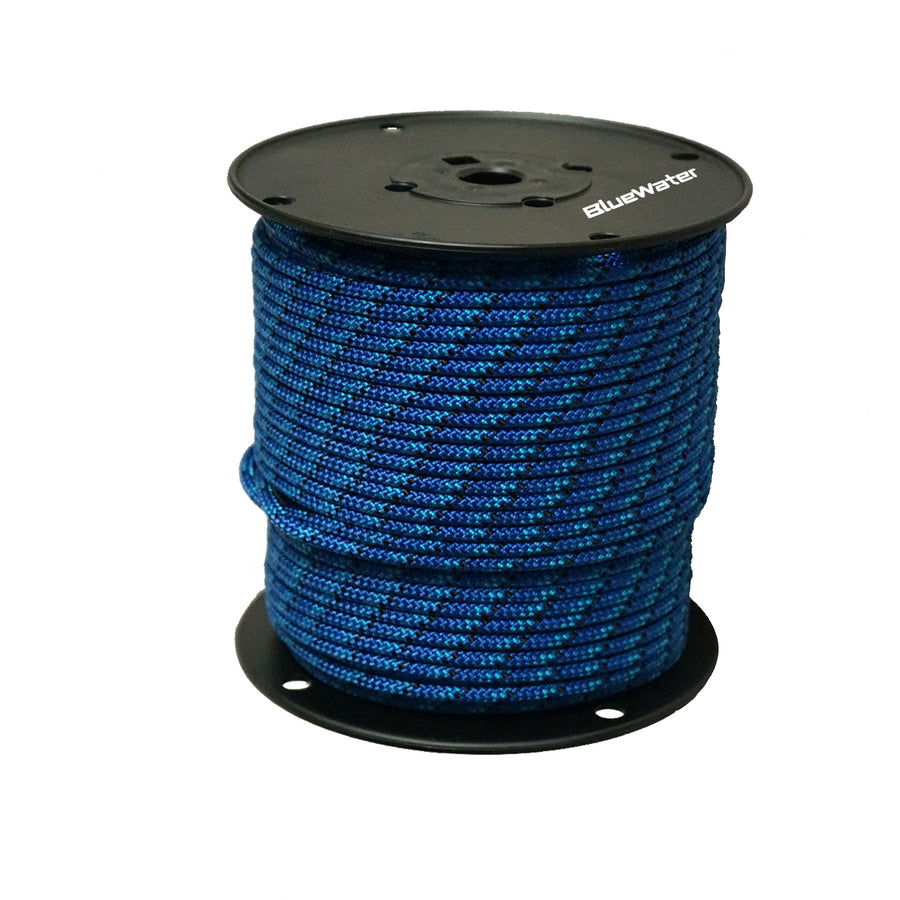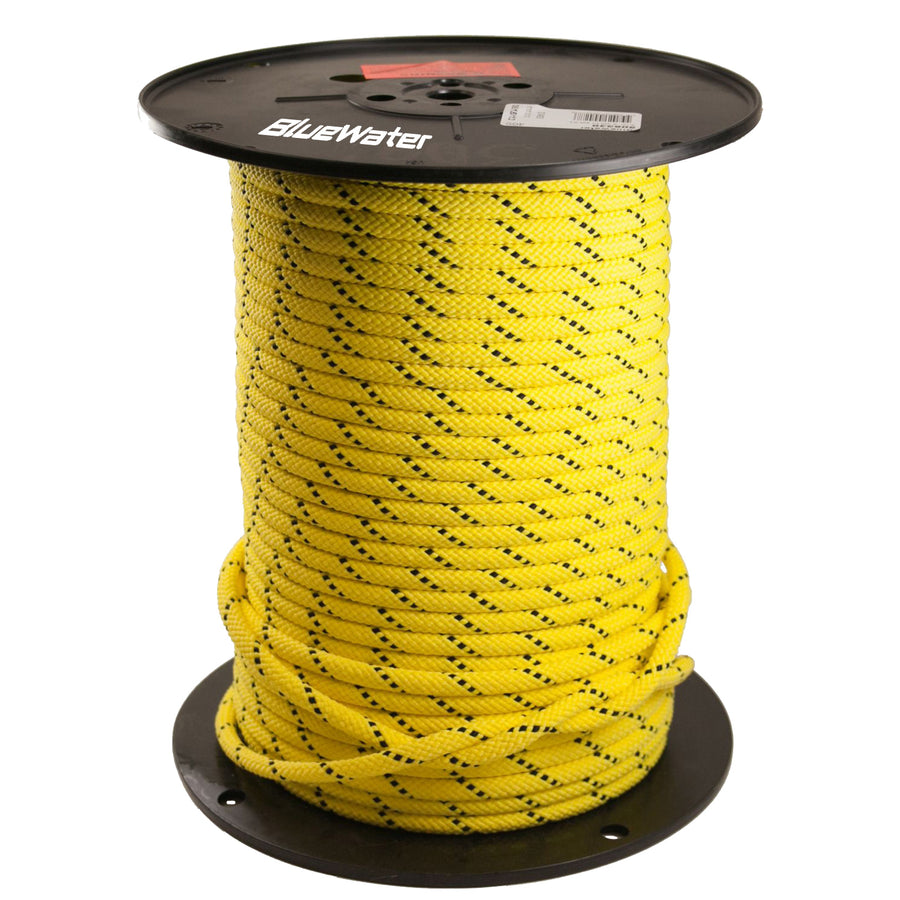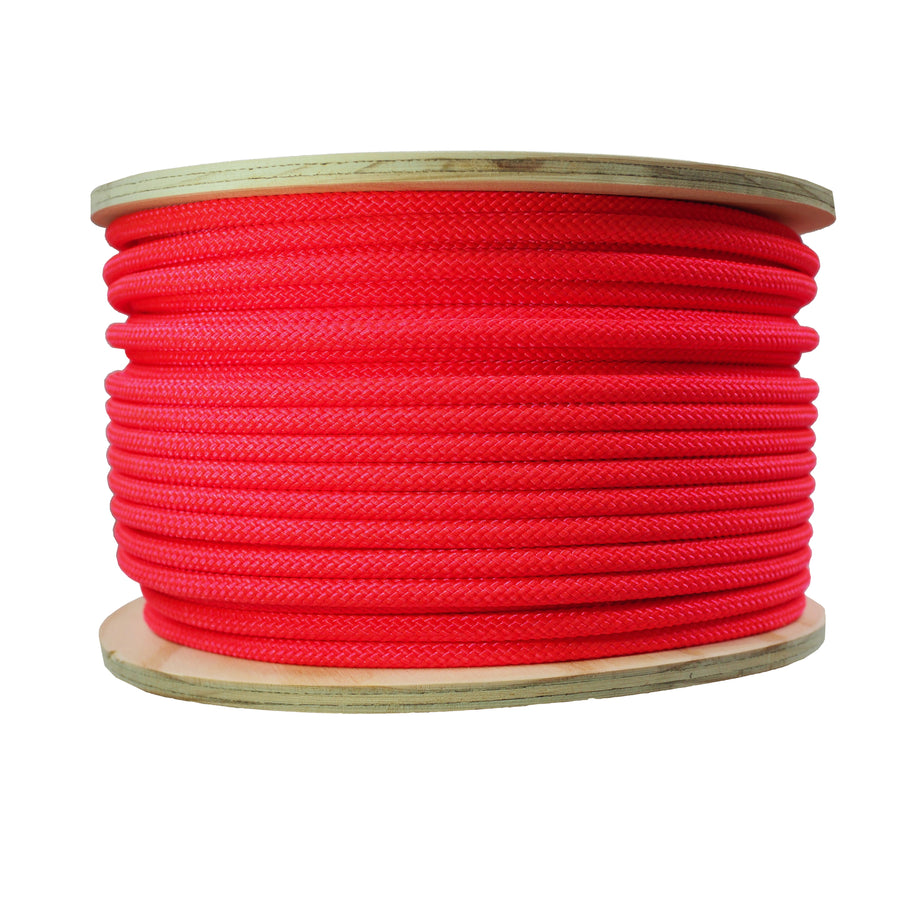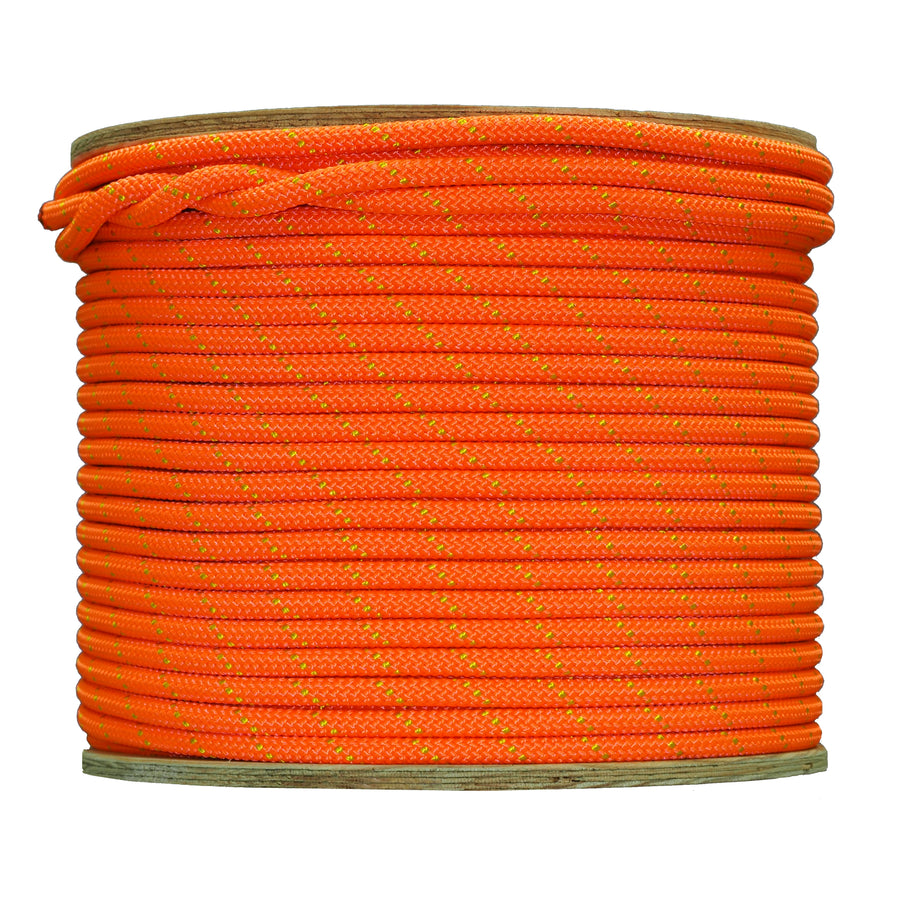
Your climbing rope is the single most important piece of gear you own. As such, it must be able to withstand incredible abuse in the way of abrasion (belaying and rappelling), adverse conditions (freezing and thawing), and exposure to sunlight (ultraviolet radiation), and still be able to protect you in the event of a fall. Not only must it possess the dynamic energy-absorbing qualities needed to protect you in the event of a fall, but also must remain relatively static when hauling and rappelling. In addition to possessing the divergent qualities needed to fulfill these requirements, a rope must also be tough and durable.
BlueWater Slimline ropes fulfill all of these requirements by providing individual models, each designed to give outstanding performance in their own applications. This allows a climber to use a different rope for each specific application.
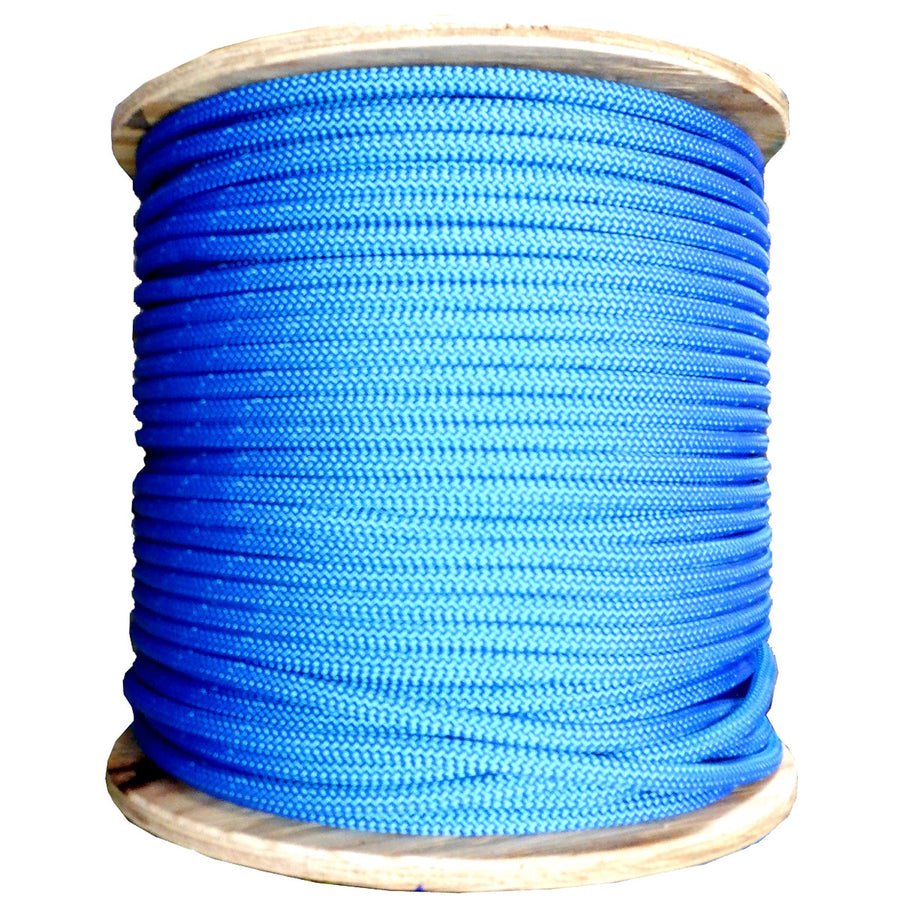
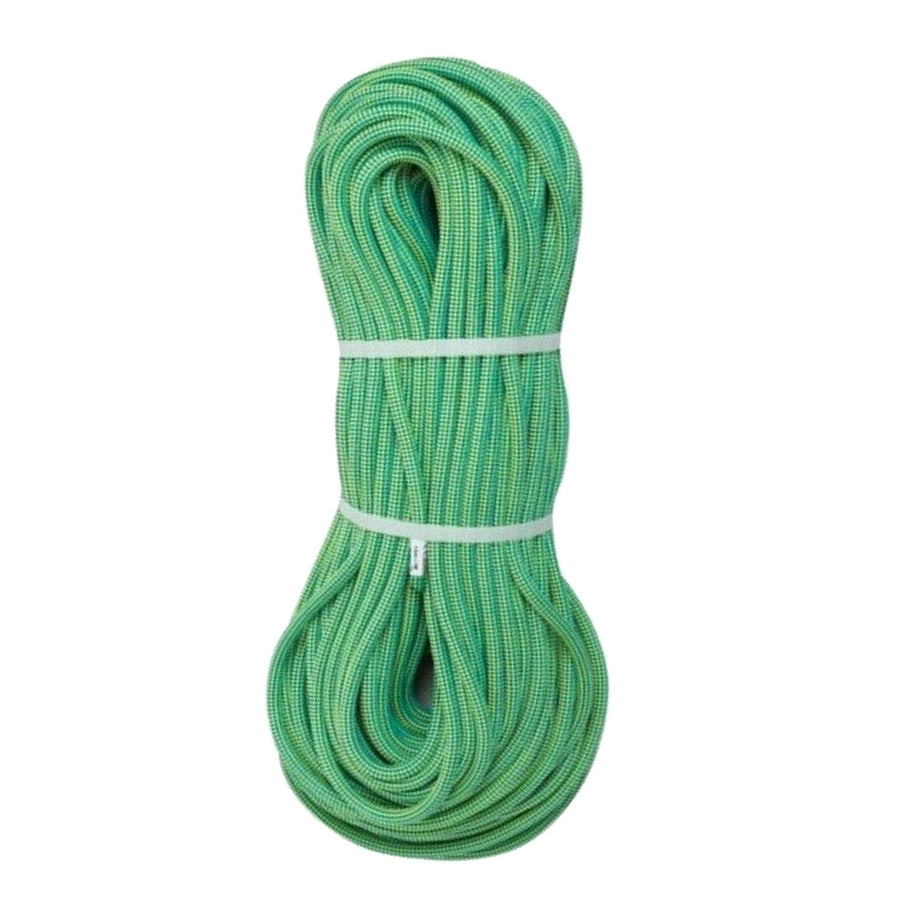
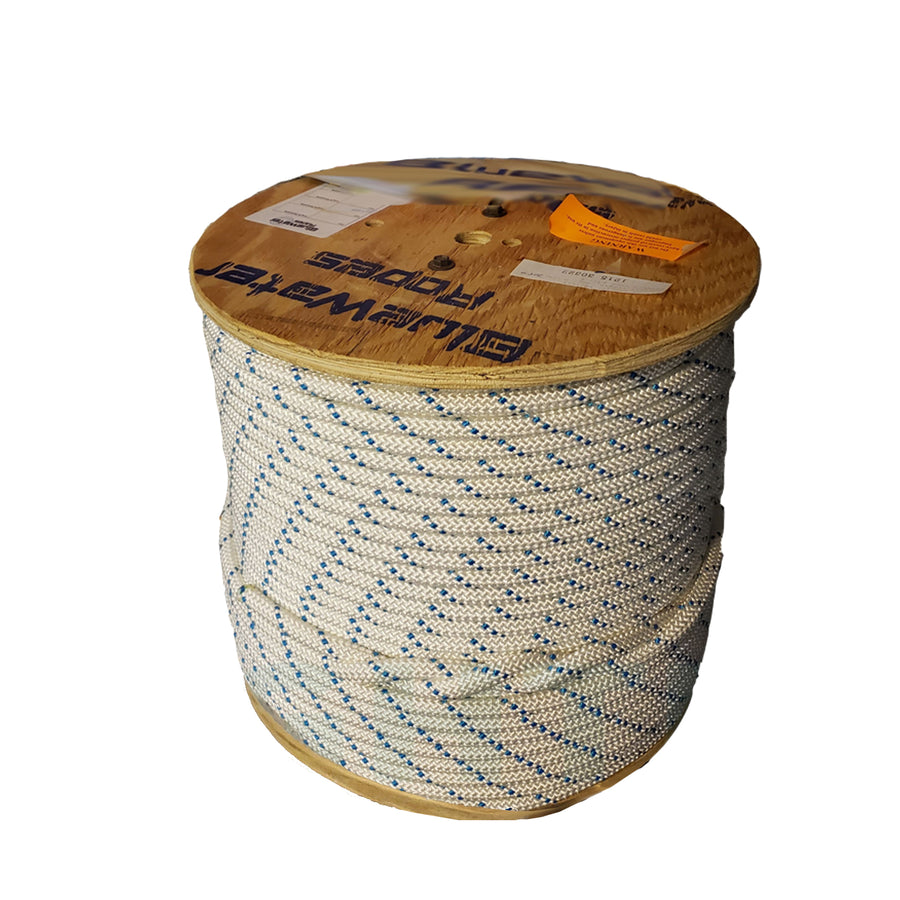
BlueWater climbing ropes use kernmantle construction. A kernmantle rope consists of a twisted core (kern) with a sheath (mantle) braided around it. The unique blend of our core and sheath construction as well as the dynamic characteristics of the nylon yarns used allows BlueWater dynamic ropes to elongate and absorb the energy of a fall. The rope's sheath is braided tightly around the core to protect it from abrasion. This also gives it a surface texture that is easy to handle and runs smoothly through karabiners and across rock. This combination of core and sheath construction creates the balance of strength, abrasion resistance, and dynamic load absorbing ability necessary to meet the demands of today's high performance climbing.
Sheath Construction A climbing rope's sheath can be made in different thicknesses and braid patterns to achieve desired durability and handling characteristics. Four-ply yarns (more strands of nylon) are used in a rope's sheath whenever greater durability and increased abrasion resistance are needed. Three-ply yarns are used when a lighter weight rope is desired. We use 48-carrier braiders to make dynamic ropes because they are best suited for making the tightly braided sheath needed on a dynamic rope. A tight sheath creates a firmer, more durable rope. A loose sheath makes a rope more flexible but also less abrasion resistant.
Tightly braided "double-pick" sheaths slip very little on the core and add firmness to the overall flex of a climbing rope. "Single-pick" braid patterns create a smooth outer finish that slides easily through karabiners and over rock.
Core Construction BlueWater dynamic rope cores use a combination of clockwise and counter clockwise twisted core bundles. These S and Z twist core bundles elongate to allow the rope to absorb the energy of a falling climber and contribute to minimizing excessive spinning when Jumaring or using the rope to lower or rappel.
Before twisted core technology was developed, climbing ropes used braided cores. Braided cores were eventually found to be less efficient in energy absorption than the newer twisted cores, and therefore less durable. Braided cores can have an initially low impact force. However, with each successive fall, the impact force increases dramatically. BlueWater's twisted cores maintain a low impact force throughout the life of the rope. Although both core styles are acceptable, ropes with the more technologically advanced twisted cores are safer and have a longer life.
The majority of the energy of a fall is absorbed by the core of the rope; however, the sheath plays a part as well. The mechanical action of the core strands untwisting, the nylon fibers stretching and the core moving within the sheath are all things that contribute to a rope's ability to absorb safely the energy of a fall.
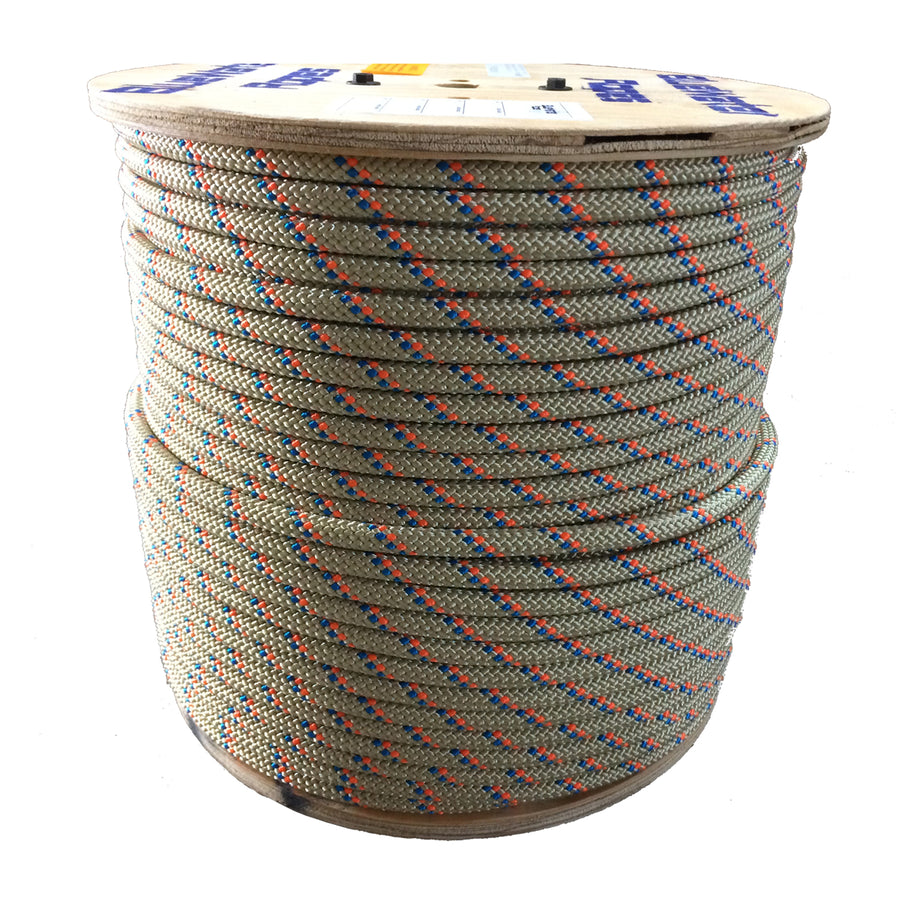
11 mm EnduroTM: The 11 mm Enduro is our most rugged and durable rope. Its 11 mm size is well suited as a first-time rope for entry level climbers. Its extreme durability adds an added level of safety for big wall climbing, climbing classes, guiding, or working sport routes.
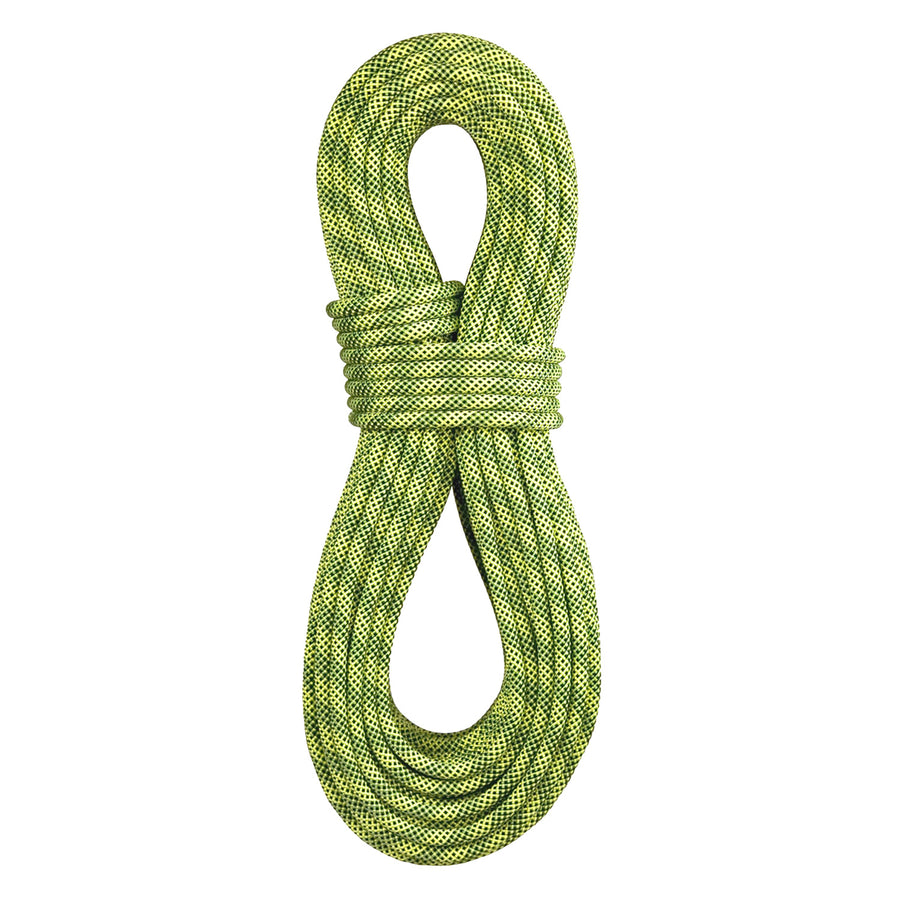
10.5 mm AcceleratorTM A multi-purpose recreational climbing rope for rock and ice climbing, the Accelerator is the perfect balance between light weight and durability. The 10.5 mm size is a good choice for use on recreational and sport climbing routes as well as ice and alpine rock climbs. Its all around performance characteristics make it the best choice for a climber using only one rope.
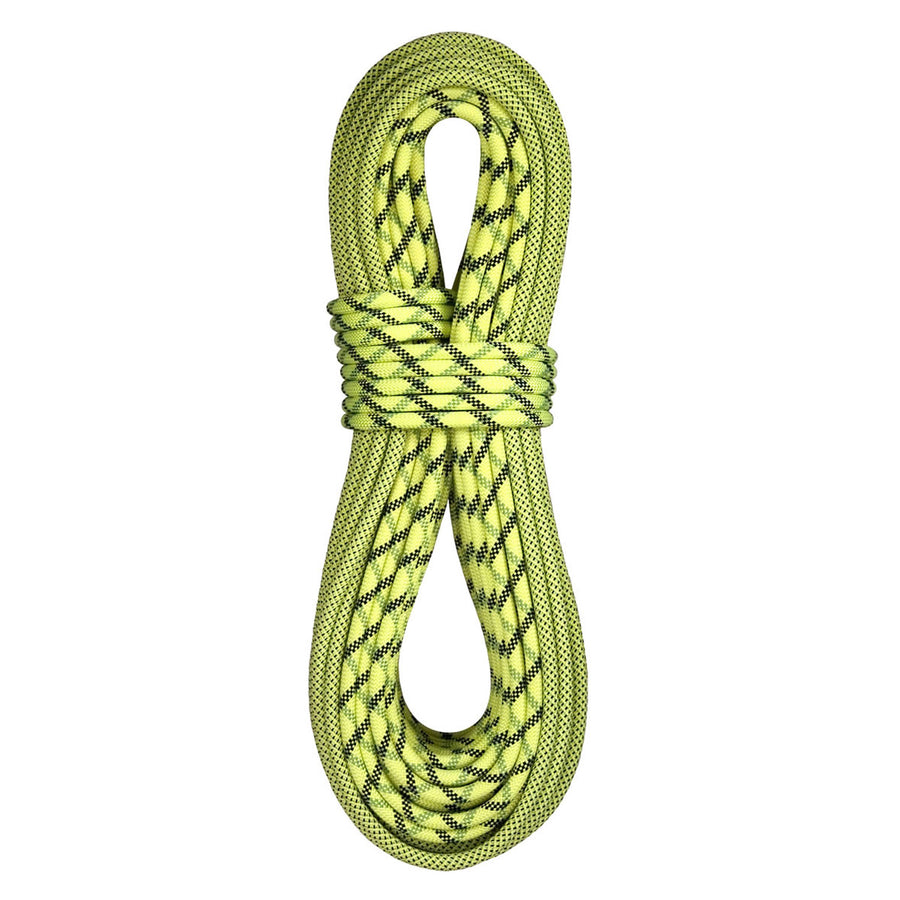
9.8 mm Lightning ProTM This rope is for the sport climber looking for the lightest rope possible to use on a red point attempt or the alpine climber doing extreme alpine rock climbs. For the sport climber, the Lightning Pro has a slim profile and is easy to clip. As the lightest weight single rope available today, the alpine climber will find the Lightning Pro allows considerable weight savings in addition to reducing bulk.
8.8 mm ExcellenceTM Destined to become a classic, the Excellence combines light weight, compact size and high performance to make it the ultimate alpine half-rope. Matched in pairs using half-rope technique, this high-strength, hard-wearing rope features a trim, easy-to-clip profile with a smooth, tightly braided single-pick sheath.
7.8 mm Ice FlossTM This super-light twin rope the lightest in the world was designed exclusively for alpine and extreme ice climbing. It features a smooth, tightly braided single-pick sheath plus our unique Double-Dry treatment for superior water and abrasion resistance. Available in two contrasting bright colors for use as a set with twin-rope technique, each strand is easy to identify when in use. (Dynamic Rope Specifications)
![]() |
46 m/150 ft. This length is suitable for use on shorter crags and is less expensive than a longer rope. In the past, 46m was considered to be the standard length, but has become less popular in recent years.
50 m/165 ft. This is today's most commonly used length. It is a versatile and useful size long enough to get up most pitches, yet not excessively heavy.
60 m/200 ft. Extra length can be useful when climbing longer routes where taking belays less often will increase the overall speed of the ascent. It also allows a climber to lower back to the ground on longer sport routes. In addition, a longer rope's useful life may be extended by removing ends as they begin to show wear. However, the entire length of rope out from the belay is used to catch a fall, so removing the worn ends is not the same as replacing the rope.
![]() |
Our Double-DryTM finish is a patented process that binds all the rope fibers in the core as well as the sheath with a finish that not only repels water but also substantially increases the rope's resistance to abrasion.
This finish effectively increases the amount of time it takes for the rope to absorb water. In a one hour laboratory submersion test (Test #0406) Double-Dry allowed only 7% moisture absorption, compared to other "dry" finishes that allowed over 40%.
Ropes become considerably heavier and weaker when they get wet; and, in cold weather, freezing can make them completely unmanageable. In actual use a rope gets tied and untied, flexed, stretched, rappelled on and piled up on the ground. All of this handling can work moisture into the open spaces between the fibers of a rope. This is why "dry" ropes sometimes still get wet in the field. The more effective a rope's waterproof treatment is, the longer it will resist absorption of water into the nylon fibers. This means that even though moisture may get trapped within the braid, the fibers themselves will not absorb water. As a result, the Double-Dry rope will be less likely to get wet initially and will dry out faster than ropes with inferior water repellent treatments. Lab and field testing has proven that conventional water repellent treatments are less than satisfactory. BlueWater's Double-Dry treatment easily out performs all other contenders.
BlueWater's standard finish ropes do not have a water repellent coating. These ropes can be used in any situation where the rope is not exposed to excessive moisture or freezing. Because standard finish ropes do not go through a special treatment process, they are a less expensive alternative to our Double-Dry finished ropes.
The pattern of a bi-color rope changes to identify easily the center point of a rope. The bi-color pattern is available only in the 11 mm Enduro.
A single rope must sustain on one strand a minimum of 5 test falls with a drop weight of 80 kg without breaking. Single ropes are recommended whenever a fall on a single strand can occur. They are safe in the event of a fall and are used in situations with potentially high fall factors.
Half ropes must also sustain 5 test falls on a single strand with a drop weight of 55 kg. They can be used as a single rope when the fall factor is less than 1. In the event of a serious fall, the necessary safety factors can only be achieved when the rope is used double. The double-rope technique is where each strand is clipped separately through different runners, giving two distinct very light single ropes. The greatest advantage of this technique is it provides less risk of total rope system failure.
Twin ropes are tested with a drop weight of 80 kg on two strands together and must survive 12 test falls. The twin-rope technique, when used correctly, provides the highest safety margin in event of a fall. In this technique both ropes are clipped together through the same karabiners where they act as a stronger, safe single rope.
Any climbing rope carrying this certification meets all the minimum safety standards set by the UIAA (Union Internationale Des Association D'Apinisme). All ropes must exhibit less than 12 kN impact force and hold at least five test falls without breaking in order to meet the minimum UIAA standard.
Single and Twin rope test fall:
80 kg/176 lbs. 4.8 m/16.5' fall 2.5 m/8.25' of rope.
Half rope test fall:
55 kg/121 lbs. 4.8 m/16.5' fall 2.5 m/8.25' of rope.
Impact Force Probably the most important single statistic on the hang tag, this figure is an accurate indication of how much force a rope is able to absorb. Since Impact Force is the maximum load transmitted to the climber and his protection, the lower this number, the better. The UIAA standard for maximum impact force, measured on the first test drop, is 12 kN (2640 lbs.) for a single rope and 8 kN (1760 lbs.) for half ropes. In the UIAA test a rope may stretch up to 45% of its total length to absorb this force.
80 kg Static Elongation This is the percentage of a rope's length it will stretch when subjected to static loading. In the UIAA test, an 80 kg (176 lbs.) weight is hung from one meter of rope. The percentage of rope stretch gives an indication of how much the rope will stretch in a static loading situation (rappelling, lowering or Jumaring). The maximum static load stretch allowed by the UIAA is 8% for single ropes and 10% for half ropes.
Falls Held In the UIAA test, an 80 kg weight is dropped 5 m on 2.8 m of rope repeatedly at five minute intervals until the rope breaks. To meet the UIAA standard a rope must survive a minimum of five test falls. This test is a factor 1.78 fall, simulating a short, severe climbing fall. It represents a theoretical "worst case" fall combining impact forces with a static belay and the effect of a standard karabiner edge. Since all ropes carrying the UIAA mark are tested the same, this number (UIAA Test Falls Held) indicates a performance comparison that can be made between different climbing ropes.
Actual climbing falls taken will most likely not be as severe as the UIAA test fall, so the number of UIAA falls held does not necessarily indicate the time at which a rope needs to be retired.
The Fall Factor is a number that can be determined theoretically; but, because of the dynamics of the many different variables that affect an actual climbing situation, it is difficult to determine accurately in a real life climbing fall. The formula to determine fall factors is the distance of the fall, divided by the amount of rope out from the belay.
Examples:
Factor 2 Fall: The climber climbs ten feet above his belayer and falls off. The total distance of the fall is twenty feet and there is ten feet of rope available to absorb the energy created by the fall. A 20 ft. fall with 10 ft. of rope out = a factor 2 fall.
Factor 1 Fall: A climber climbs ten feet and clips a bolt. He/She climbs another ten feet and falls off. The total distance of the fall is twenty feet and there is twenty feet of rope available to absorb the energy created by the fall. A 20 ft. fall with 20 ft. of rope out = a factor 1 fall.
Factor .67 Fall: If however, the climber climbs 10 ft. and clips a bolt, climbs another 10 ft. and clips a second bolt, then climbs another 10 ft. and falls off, he/she would fall a distance of 20 ft. with 30 ft. of rope available to catch the fall. The fall factor in this case is .67. In this scenario there is more rope available to absorb the energy of the fall. A 20 ft. fall with 30 ft. of rope out = a factor .67 fall.
Many variables are present in an actual climbing situation, making it almost impossible to determine the actual factor of any given climbing fall. A fall on steep overhanging terrain, where the climber falls free through the air comes closest to simulating a UIAA test fall. Multiple factors come in to play to absorb much of the energy of the fall to lessen the impact force on both the falling climber and the belay anchors. Rope slipping through the belay device, the belayer absorbing some of the force of the fall with the weight of his/her body, absorption of energy through nuts setting in cracks or slings stretching are but a few. A fall taken on less than vertical terrain will also lessen the amount of force the system must absorb, as the friction of the climber sliding down the rock will effect the amount of force generated.
In sport climbing, a climber will often take many repeated short falls on protection, 30 or 40 feet out from the belay. This is probably the harshest kind of use a rope will receive. The fall factor here is very small. However, with each fall the rope is stretched over the karabiner's edge, using up a little of its ability to absorb energy. This tends to wear out more quickly the 10 to 20 feet at each end of the rope over the rest of the rope. High abrasion, stiffening and sheath slippage are all signs of this kind of wear. One of the reasons longer (60 m) ropes have recently become popular is that they can be shortened as the ends wear, extending the life of the rope. Remember that repeated falls take a toll on the entire rope, so removing worn ends is not the same as replacing the rope.
We conducted sample testing (Test #0425) to simulate the short falls a climber would take on a rope in a situation like this. This test was done on our standard UIAA test tower using a 10.5 mm rope. We dropped an 80 kg weight 1.6 meters on 2.5 m of rope. (fall factor .64). in an attempt to simulate a short leader fall or the type of fall that would be experienced in a ropes course. Our findings indicated that after 25 drops the rope retained approximately 68% of its total strength. After 50 drops this changed to 60%. After 100 drops the strength fell to 48% and 125 drops lessened the rope's strength to 37%.
At 75 drops the rope showed its first sign of core damage (one broken core strand) and at 100 drops there were three broken core strands. It can not be assumed that this strength loss will be linear; it can vary widely, particularly after the 100 drop level has been reached.
Many factors need to be considered when choosing a climbing rope. No single factor should be used in making this decision. Large diameter ropes should be used when greater durability and longer life are needed. Smaller diameter ropes are suitable when lighter weight and a more compact size are desired. A low impact force indicates a rope's ability to protect the falling climber from injury due to the absorption of force by the rope. Static elongation indicates how much stretch can be expected while rappelling or Jumaring. UIAA test falls held give an indication of the rope's durability and the length of its useful life. Carefully compare all of a rope's characteristics and choose a rope with the proper blend of these features to meet your specific needs.
![]() |
Back to top | Introduction
| Dynamic Ropes |
Rope Care |
Gym Ropes |
River Rescue Ropes |
Static Ropes
| Cords |
Webbing |
Sewn Runners |
Harnesses |
Accessories |
Aluminium Karabiners |
Steel Karabiners
Hardware |
CocoNuts |
Helmets | Contact
| Conversion Factors |
Index
Ropes can be damaged in many ways. Rock is abrasive and often has sharp edges to which a climbing rope is constantly being exposed. Any time a rope is under a load it will cut or abrade more easily than when it is not. Care must be taken to use suitable length runners to rig ropes so as to avoid contact with sharp edges on the rock, the inside edges of karabiner gates or dragging sideways over rough surfaces under tension to prevent damage by cutting or abrasion.
Repeated falls over a karabiner such as commonly occur in sport climbing will also contribute to wearing out a rope. With these falls continually taken at the same spot, the rope will quickly show wear to both the sheath and core. Abrasion to the sheath, the sheath being pushed along the core and core strands stretching or breaking are all examples of the kind of wear a rope subjected to these conditions will exhibit.
The tighter radius a rope is bent around, the more wear a rope will sustain. Smaller radius karabiners and figure eights are harder on ropes than larger radius ones. A rappel rack with brake bars utilizes the greatest amount of friction with a minimum of bending the rope around a radius and causes the least amount of wear on a rope.
Heat generated from friction created when rappelling or lowering, can cause glazing and abrasion to the sheath of a rope as well. Rappelling should always be done slowly and in control to prevent this kind of damage from occurring.
It is important to realize that no climbing rope will last forever even when
subjected to normal use. Just as climbing shoes eventually wear out, so will
a climbing rope. Careful handling and attention as well as recording a rope's
history in the BlueWater Climbing Journal will help determine when it is
time to retire a
rope.
Inspect your rope regularly It is important to inspect your rope before and after each use. It is the user's responsibility to know the history of his/her rope and to make the decision as to when the rope should be retired.
Sheath damage is the most common cause for early rope retirement. Special care should be taken to protect your rope from abrasion. This occurs most often when your rope, under tension, comes into contact with rough or sharp edges. Using rope protectors and karabiners with hooded gates help to minimize this problem. Remember, a rope under tension will always be more susceptible to damage than one that is not.
Multiple short falls will eventually wear out both the core and sheath of your rope. "Mileage" is the determining factor here, not time. Depending upon the number of falls taken, a rope can wear out rapidly or last many years. Remember, a rope's ability to absorb energy diminishes each time it is subjected to a load.
Always use proper rappelling and belaying techniques Fast rappels, bounding and swinging, running the rope over a sharp edge etc., are all things that can potentially damage your rope. Any belay or rappel device puts sharp bends in a rope and will contribute to the potential abrasion your rope receives. Some belay devices will abrade a rope more quickly than others. The sharper the bends, the faster a rope will wear.
Fast rappels create excessive heat from friction that your rappel device cannot always dissipate. This heat can melt the nylon on the surface of the sheath causing a "glazing" effect, dramatically shortening the life of your rope. Always take care to rappel and lower climbers slowly and in control.
Avoid stepping on your rope Besides the potential of cutting, stepping on a rope will grind dirt into the core and increase the possibility of internal abrasion.
Protect your rope from exposure to harsh chemicals Do not allow your rope to come into contact with any compounds containing acids, alkalies, oxidizing agents or bleaching compounds. Be especially careful to avoid contact with battery acid or fumes.
To help protect a rope from coming into contact with unidentified chemicals, always store and transport it in a rope bag.
Testing done by the AlliedSignal Corporation indicates salt water, acetone, benzene, chloroform, freon, gasoline, kerosene, motor oil, mineral oil, paints and pine oil do not appreciably affect nylon and should not damage your rope.
Laboratory tests performed have shown no appreciable damage done to nylon fibers by contact with insect repellents containing DEET (Test #0559).
Keep your rope clean Dirt can shorten the life of your rope by increasing internal and external abrasion. It is a good idea to occasionally wash a rope to remove dirt and rock crystals. Put the rope in a pillow case or washing bag and use a front loading machine with cold water only to prevent shrinkage. It is acceptable to use a mild soap to remove oil or grease but avoid harsh detergents. DO NOT USE BLEACH OR BLEACH SUBSTITUTES. Make sure to rinse thoroughly. Small amounts of fabric softener may be used to give better flexibility and a softer hand as a rope stiffens with use. Your rope should be air dried away from direct sunlight. It will not harm a rope to store it wet. Nylon is not affected by water and will not rot or mildew.
Know when to retire your dynamic rope Excessive sheath abrasion is the most obvious clue to indicate time for rope retirement. The repeated short falls taken in sport climbing are the most common cause of this abrasion. Damage from karabiner gates, sharp edges, rough rock surfaces and glazing from fast rappels and sheath slippage should also be watched for. If the rope's sheath is badly glazed, excessively abraded or showing through to the core, it is time to retire it.
Soft, hollow, or lumpy spots in the rope can indicate internal core damage. If any of these are found, the rope should be retired.
Often the 10 or 20 feet of rope on either end will wear out before the rest of the rope. It is acceptable to remove these damaged ends and continue to use the rest of the rope. Remember that repeated falls take a toll on the entire rope, so removing worn ends is not the same as replacing the rope.
The following are general guidelines that can assist in deciding when to retire a rope:
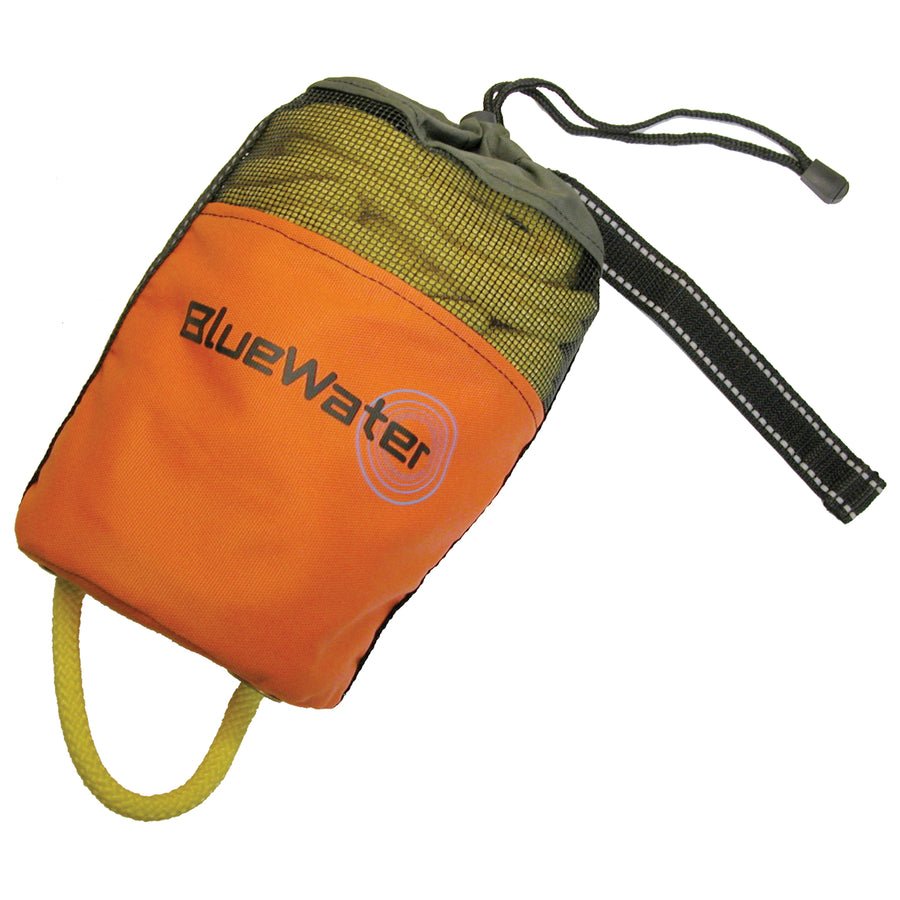
Kinking BlueWater kernmantle ropes use both S and Z-twist core bundles to avoid the uni-directional twisting that can cause a climbing rope to kink. Normal handling, and modern rappel and belay devices can all introduce twists into a rope, causing it to kink. The standard practice of "coiling" a rope for transport and storage compounds this problem. It is important to regularly remove these kinks by "cleaning" the rope from its coil into a pile, flipping the kinks out the end before each use. Periodically hanging the rope and flipping out the kinks when rappelling also helps. Storing and carrying your rope in a bag like the BlueWater Attaché also helps minimize kinking.
Shelf life Although there is no conclusive evidence from nylon manufacturers, we recommend the shelf life of an unused rope to be five years.
Seek proper instruction in the correct techniques and use of all climbing ropes and equipment. A new climber's lack of experience is often the reason climbing ropes are inadvertently exposed to situations that cause premature rope damage.
Back to top | Introduction
| Dynamic Ropes |
Rope Care |
Gym Ropes |
River Rescue Ropes |
Static Ropes
| Cords |
Webbing |
Sewn Runners |
Harnesses |
Accessories |
Aluminium Karabiners |
Steel Karabiners
Hardware |
CocoNuts |
Helmets | Contact
| Conversion Factors |
Index
©1996 No part of this document may be reproduced without authorization from BlueWater, Ltd
209 Lovvorn Road, Carrollton, Georgia 30117, USA
Tel: (770) 834 7515 Fax: (770) 836 1530
email: info@bluewaterropes.com